The Importance of Brake Fluid Hoses
Before understanding the importance of brake hoses, we first need to examine the architecture of the entire braking system. The braking system consists of the master cylinder, calipers, brake discs, brake pads, and brake hoses, utilizing hydraulic braking to ensure the transmission of braking pressure. Taking disc brakes as an example, the braking system includes core components such as the master cylinder, calipers, brake discs, brake pads, and brake hoses. Most passenger cars adopt hydraulic braking, which has the advantage of being difficult to compress, ensuring near 100** transmission of braking pressure.
When the driver presses the brake pedal, the booster applies pressure to the master cylinder. Subsequently, the brake fluid in the master cylinder is transmitted through the piping system to the brake caliper pistons at each wheel. The pistons then drive the brake calipers to clamp the brake discs, generating significant friction to achieve vehicle deceleration. The piping system responsible for transmitting this braking pressure and delivering the brake fluid is what we refer to as the brake oil pipe.
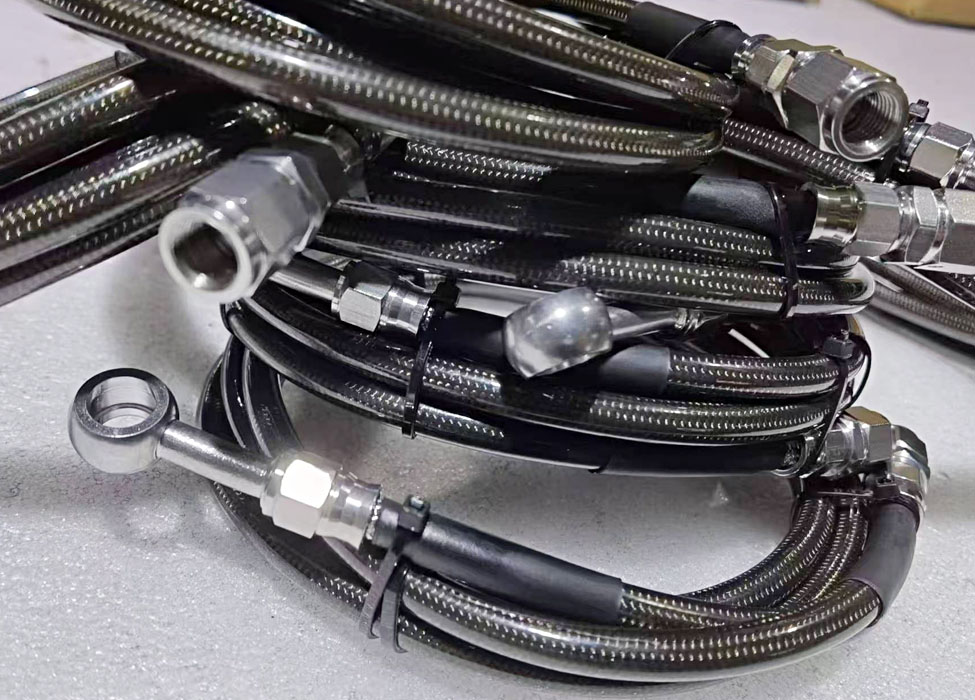
It is noteworthy that the main sections of brake oil pipes are typically constructed from rigid metal tubing. However, when the pipeline reaches the area between the vehicle's suspension and the wheels, the steering and bouncing caused by road irregularities make rigid tubing inadequate for this purpose. Consequently, this section of the pipeline requires more flexible material, leading to the development of brake hoses.


Feel Free to Contact Us, Get In Touch