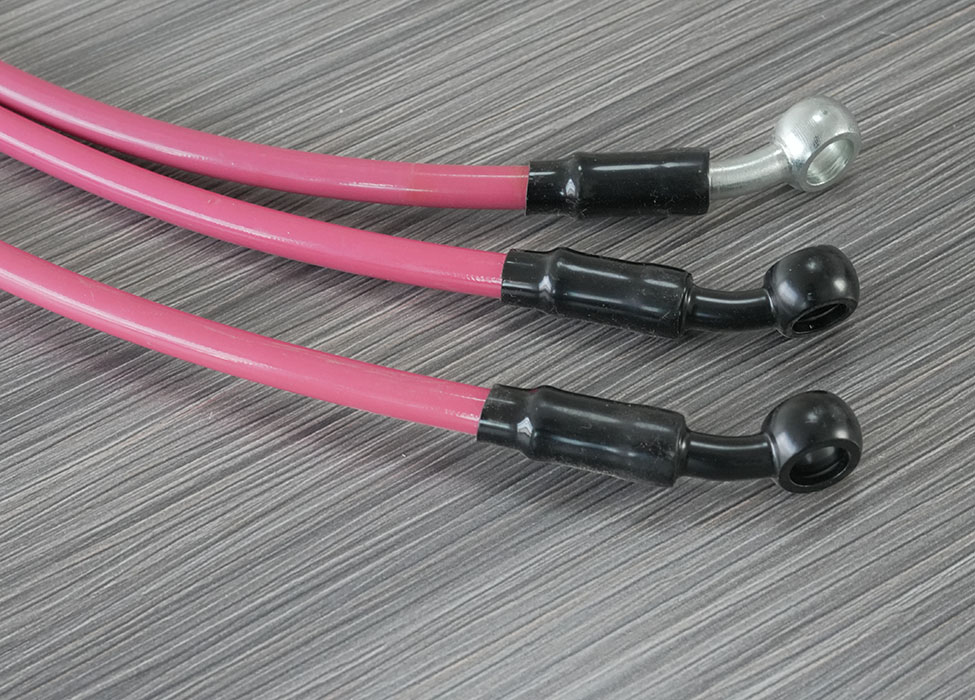
PTFE Brake Line Assembly
PTFE Brake Lines: A Reliable Upgrade for High-Performance Braking Systems
In modern automotive braking systems, the quality of brake lines directly impacts safety, response speed, and long-term durability. While original equipment vehicles typically use standard rubber hoses, a growing number of car owners and high-performance brands are upgrading to PTFE brake lines for improved stability and consistent hydraulic performance.
As a professional brake line manufacturer, we focus on producing high-quality PTFE brake hoses designed specifically for high-performance vehicles, racing cars, motorcycles, and heavy-duty applications.
What are PTFE Brake Lines?
PTFE brake lines, also known as Teflon brake hoses, consist of a polytetrafluoroethylene (PTFE) inner tube and a stainless steel braided outer layer. Some designs also include a PVC coating for added protection and a customizable appearance.
This multi-layered construction ensures strength, flexibility, and long-term reliability under extreme braking conditions. Compared to traditional rubber hoses, PTFE brake lines offer superior pressure resistance, high-temperature resistance, and chemical corrosion resistance.
Key Features of PTFE Brake Lines
1. Minimal Expansion Under High Pressure
During braking, the hydraulic pressure within the brake line increases instantaneously. Traditional rubber brake lines are prone to slight expansion under pressure, especially after prolonged use. This expansion reduces braking efficiency and results in a softer pedal feel.
PTFE brake lines are designed to minimize volume expansion. Their robust Teflon core maintains its shape even under high pressure, ensuring:
Faster braking response
Stable and consistent pedal feel
Higher braking precision
Stable performance during continuous braking
Maintaining precise hydraulic transmission is crucial for high-performance cars and racing.
2. Excellent Heat Resistance
High-speed driving, track use, and downhill braking generate significant heat in the braking system. Rubber lines exposed to high temperatures for extended periods may soften or age.
PTFE material exhibits excellent thermal stability. Stainless steel brake lines with a PTFE core can operate reliably over a wide temperature range without losing structural integrity. This makes PTFE brake lines suitable for harsh environments with frequent temperature fluctuations.
3. Superior Chemical Corrosion Resistance
Brake fluid is highly corrosive and can cause internal damage to ordinary rubber hoses. Polytetrafluoroethylene (PTFE) is chemically stable and resists:
Brake fluid corrosion
Hydroxyactivity
Oil and chemical corrosion
Unlike rubber, PTFE does not react with brake fluid or absorb moisture. This prevents internal hose swelling or aging and helps maintain a stable fluid flow throughout the hose's lifespan.
4. High Burst Strength and Safety Margin
The stainless steel braided layer encasing the PTFE core significantly enhances mechanical strength. It provides high burst pressure and protects the hose from external abrasion and impact.
High-quality braided brake hoses undergo rigorous pressure and leak testing during production. Proper crimping techniques and precise fitting assembly are crucial for ensuring safety and durability.
For high-performance applications, a strong safety margin is not optional but essential.
5. Long Service Life and Excellent Aging Resistance
Rubber brake hoses age due to thermal cycling, ozone exposure, and environmental factors. Over time, this can lead to cracking or decreased flexibility.
PTFE brake lines have superior anti-aging properties. Even with prolonged use, they maintain their flexibility and structural integrity. This reduces replacement frequency and improves overall reliability.
For dealers and automotive brands, a longer lifespan means fewer warranty issues and greater customer confidence.